

June 22, 2026
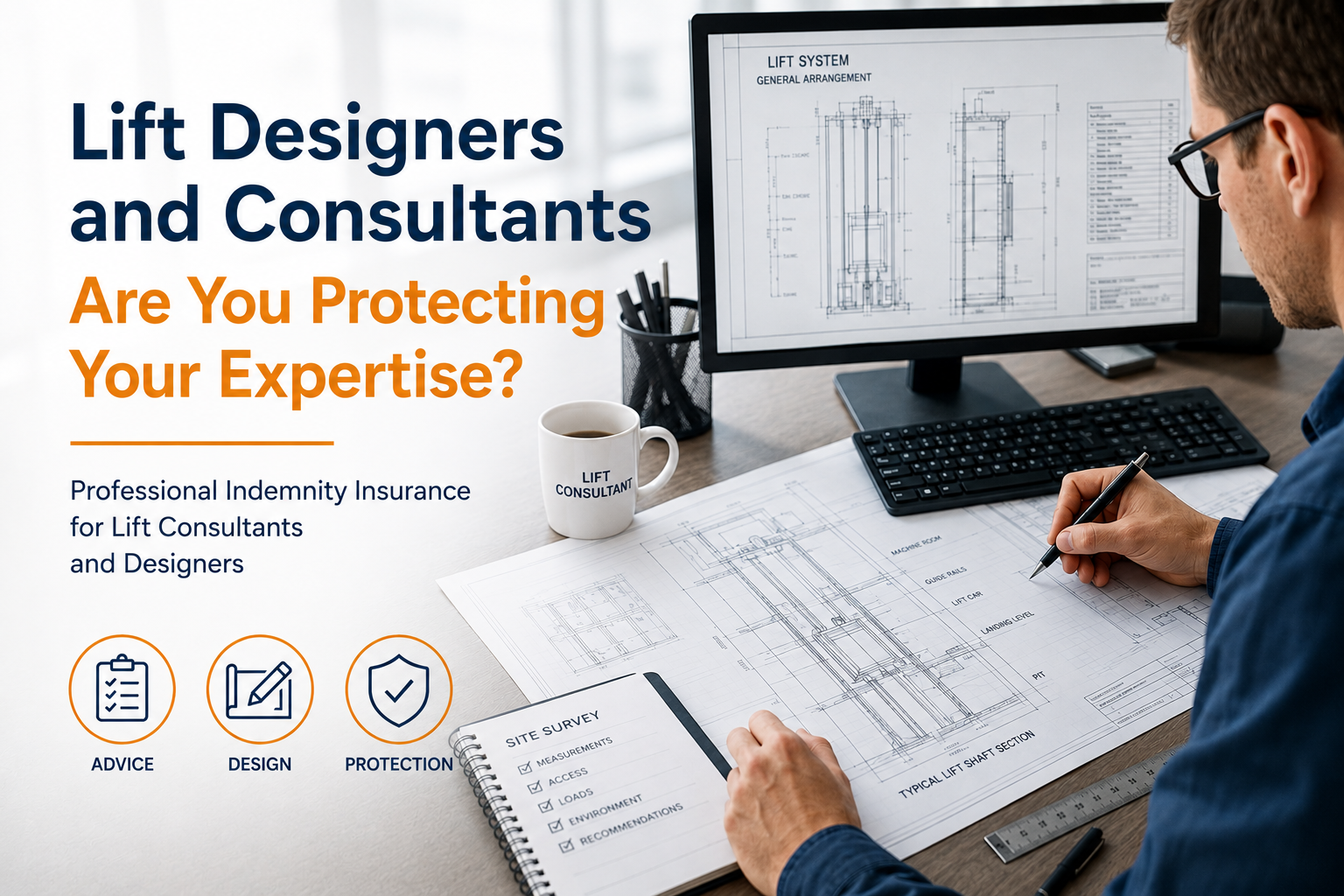
“If your expertise, advice, specifications or recommendations influence a client’s decisions, you may have Professional Indemnity exposure.”
When people think about insurance risks in the lift industry, they often focus on physical work. Installation, maintenance, repairs and the potential for injury or property damage tend to be front of mind.
But not every claim arises from work carried out on site.
For lift consultants, designers and businesses that provide technical advice, specifications, surveys or modernisation recommendations, professional indemnity can create a very different type of risk.
A report, design recommendation or piece of advice that later proves incorrect could result in a client suffering financial loss, project delays or unexpected costs. Even if no one has been injured and no physical damage has occurred, a claim could still follow.
That’s where Professional Indemnity (PI) insurance becomes essential.
In this article, we’ll explain what PI insurance covers, and why it’s particularly important for lift consultants and designers.
What is professional indemnity insurance?
Professional Indemnity (PI) insurance is designed to protect individuals and businesses that provide professional advice, services or recommendations.
It can help cover legal costs and compensation claims if a client alleges that an error, omission or negligent piece of advice has caused them financial loss.
Unlike Employers’ Liability or Public Liability insurance, PI insurance isn’t primarily concerned with injury or property damage. Instead, it focuses on the financial consequences of professional services.
For example, if a consultant provides an incorrect specification, overlooks a key requirement or makes a recommendation that later leads to additional costs, delays or remedial work, a client may seek to recover those losses.
Even where a claim is unsuccessful, the legal costs involved in defending it can be significant.
PI insurance can help provide protection against these expenses, as well as the claim itself where cover applies.
Why do lift consultants and designers face particular risks?
Producing system specifications, carrying out surveys, preparing reports, advising on modernisation projects and making recommendations can all influence significant financial decisions.
Clients rely on this expertise when planning maintenance programmes, refurbishment works, replacements and new installations.
As a result, an error, omission or misunderstanding can have far-reaching consequences.
For example:
- A survey may fail to identify a key issue
- A specification might not fully meet the needs of a building
- A recommendation could result in unexpected costs later in a project
Even where the advice was given in good faith, clients may still seek to recover losses if they believe professional services have fallen short of expectations.
That’s why Professional Indemnity insurance is an important consideration for lift consultants, designers and others whose expertise forms a key part of the service they provide.
Typical lift industry risk examples
Professional indemnity often stems from advice, recommendations, designs, specifications or reports.
If a client relies on that information and subsequently suffers a financial loss, questions may be asked about whether the advice was appropriate.
Consider the following examples:
A consultant specifies the wrong solution
A consultant recommends a lift modernisation programme that later proves unsuitable for the building’s requirements or setup. The project has to be redesigned, causing delays and additional costs.
A survey overlooks a key issue
A pre-project survey fails to identify a significant problem with an existing installation. The issue is discovered once work has started, leading to unexpected expenditure and disruption.
A report contains an error
A client relies on information contained within a technical report when making investment decisions. When an error comes to light, they seek to recover the resulting financial losses.
In each case, there may be no injury and no property damage. However, there is still the potential for a professional indemnity claim if the client believes the advice or information provided contributed to their loss.
This is precisely the type of exposure that Professional Indemnity insurance is designed to address.
Why does Professional Indemnity insurance protect more than just your finances?
The financial cost of a claim is often the first thing that comes to mind. However, the impact can extend much further than compensation alone.
Defending a claim can involve significant legal costs, management time and disruption to day-to-day operations. Responding to allegations can be expensive and time-consuming.
There is also the potential impact on reputation. Trust is a valuable asset in the lift industry, particularly for consultants and designers whose clients rely heavily on their expertise and professional judgement.
A dispute can place pressure on client relationships and confidence, regardless of the eventual outcome.
Professional Indemnity insurance can help provide support when these situations arise, allowing businesses to focus on resolving issues and maintaining client relationships rather than dealing with the financial burden alone.
It’s also worth noting that some contracts may require businesses to hold Professional Indemnity insurance before work can begin. Larger tenders will often ask for evidence of cover and/or stipulate required levels.
Having suitable cover in place may therefore not only provide protection, but also help demonstrate professionalism and give clients added confidence in the services being provided.
Do you need Professional Indemnity Insurance?
If the answer to any of the following questions is yes, there may be a professional indemnity exposure that should be considered:
For example:
- Do you provide professional advice or recommendations?
- Do you carry out surveys or inspections?
- Do you prepare reports that clients rely upon?
- Do you produce designs or specifications?
- Do you recommend repair, replacement or modernisation solutions?
- Do clients expect you to use your technical knowledge and judgement when advising them?
- Do you provide emergency release training?
- Do you offer CDM Principal Designer duties under Construction (Design & Management) Regulations?
It’s also worth reviewing any contractual requirements. Some clients, contractors and procurement processes may expect Professional Indemnity insurance to be in place before work begins.
Every business is different, which is why it’s important to review your activities carefully and seek appropriate advice if you’re unsure what level of protection may be suitable.
Protecting your expertise with the right cover
Professional Indemnity insurance is often associated with consultants and designers, but professional indemnity exposure can arise in many areas of the lift industry and wider construction, manufacturing and engineering sector.
Whether you’re producing reports, carrying out surveys, providing technical advice or recommending solutions to clients, it’s important to consider how you could be affected if something goes wrong.
At Robert Gerrard, part of the Jensten Group, we take the time to understand the work your business undertakes and the risks that come with it. This allows us to recommend insurance solutions that reflect your specific needs.
If you’d like to review your existing cover or discuss whether Professional Indemnity insurance could be appropriate for your business, get in touch with Team RG today.
Share This Story, Choose Your Platform!
“If your expertise, advice, specifications or recommendations influence a client’s decisions, you may have Professional Indemnity exposure.”
When people think about insurance risks in the lift industry, they often focus on physical work. Installation, maintenance, repairs and the potential for injury or property damage tend to be front of mind.
But not every claim arises from work carried out on site.
For lift consultants, designers and businesses that provide technical advice, specifications, surveys or modernisation recommendations, professional indemnity can create a very different type of risk.
A report, design recommendation or piece of advice that later proves incorrect could result in a client suffering financial loss, project delays or unexpected costs. Even if no one has been injured and no physical damage has occurred, a claim could still follow.
That’s where Professional Indemnity (PI) insurance becomes essential.
In this article, we’ll explain what PI insurance covers, and why it’s particularly important for lift consultants and designers.
What is professional indemnity insurance?
Professional Indemnity (PI) insurance is designed to protect individuals and businesses that provide professional advice, services or recommendations.
It can help cover legal costs and compensation claims if a client alleges that an error, omission or negligent piece of advice has caused them financial loss.
Unlike Employers’ Liability or Public Liability insurance, PI insurance isn’t primarily concerned with injury or property damage. Instead, it focuses on the financial consequences of professional services.
For example, if a consultant provides an incorrect specification, overlooks a key requirement or makes a recommendation that later leads to additional costs, delays or remedial work, a client may seek to recover those losses.
Even where a claim is unsuccessful, the legal costs involved in defending it can be significant.
PI insurance can help provide protection against these expenses, as well as the claim itself where cover applies.
Why do lift consultants and designers face particular risks?
Producing system specifications, carrying out surveys, preparing reports, advising on modernisation projects and making recommendations can all influence significant financial decisions.
Clients rely on this expertise when planning maintenance programmes, refurbishment works, replacements and new installations.
As a result, an error, omission or misunderstanding can have far-reaching consequences.
For example:
- A survey may fail to identify a key issue
- A specification might not fully meet the needs of a building
- A recommendation could result in unexpected costs later in a project
Even where the advice was given in good faith, clients may still seek to recover losses if they believe professional services have fallen short of expectations.
That’s why Professional Indemnity insurance is an important consideration for lift consultants, designers and others whose expertise forms a key part of the service they provide.
Typical lift industry risk examples
Professional indemnity often stems from advice, recommendations, designs, specifications or reports.
If a client relies on that information and subsequently suffers a financial loss, questions may be asked about whether the advice was appropriate.
Consider the following examples:
A consultant specifies the wrong solution
A consultant recommends a lift modernisation programme that later proves unsuitable for the building’s requirements or setup. The project has to be redesigned, causing delays and additional costs.
A survey overlooks a key issue
A pre-project survey fails to identify a significant problem with an existing installation. The issue is discovered once work has started, leading to unexpected expenditure and disruption.
A report contains an error
A client relies on information contained within a technical report when making investment decisions. When an error comes to light, they seek to recover the resulting financial losses.
In each case, there may be no injury and no property damage. However, there is still the potential for a professional indemnity claim if the client believes the advice or information provided contributed to their loss.
This is precisely the type of exposure that Professional Indemnity insurance is designed to address.
Why does Professional Indemnity insurance protect more than just your finances?
The financial cost of a claim is often the first thing that comes to mind. However, the impact can extend much further than compensation alone.
Defending a claim can involve significant legal costs, management time and disruption to day-to-day operations. Responding to allegations can be expensive and time-consuming.
There is also the potential impact on reputation. Trust is a valuable asset in the lift industry, particularly for consultants and designers whose clients rely heavily on their expertise and professional judgement.
A dispute can place pressure on client relationships and confidence, regardless of the eventual outcome.
Professional Indemnity insurance can help provide support when these situations arise, allowing businesses to focus on resolving issues and maintaining client relationships rather than dealing with the financial burden alone.
It’s also worth noting that some contracts may require businesses to hold Professional Indemnity insurance before work can begin. Larger tenders will often ask for evidence of cover and/or stipulate required levels.
Having suitable cover in place may therefore not only provide protection, but also help demonstrate professionalism and give clients added confidence in the services being provided.
Do you need Professional Indemnity Insurance?
If the answer to any of the following questions is yes, there may be a professional indemnity exposure that should be considered:
For example:
- Do you provide professional advice or recommendations?
- Do you carry out surveys or inspections?
- Do you prepare reports that clients rely upon?
- Do you produce designs or specifications?
- Do you recommend repair, replacement or modernisation solutions?
- Do clients expect you to use your technical knowledge and judgement when advising them?
- Do you provide emergency release training?
- Do you offer CDM Principal Designer duties under Construction (Design & Management) Regulations?
It’s also worth reviewing any contractual requirements. Some clients, contractors and procurement processes may expect Professional Indemnity insurance to be in place before work begins.
Every business is different, which is why it’s important to review your activities carefully and seek appropriate advice if you’re unsure what level of protection may be suitable.
Protecting your expertise with the right cover
Professional Indemnity insurance is often associated with consultants and designers, but professional indemnity exposure can arise in many areas of the lift industry and wider construction, manufacturing and engineering sector.
Whether you’re producing reports, carrying out surveys, providing technical advice or recommending solutions to clients, it’s important to consider how you could be affected if something goes wrong.
At Robert Gerrard, part of the Jensten Group, we take the time to understand the work your business undertakes and the risks that come with it. This allows us to recommend insurance solutions that reflect your specific needs.
If you’d like to review your existing cover or discuss whether Professional Indemnity insurance could be appropriate for your business, get in touch with Team RG today.