

March 31, 2025
Most businesses assume downtime is only caused by fire or flooding, but there are many other risks that can bring operations to a halt – risks that any business of any size or industry sector can be exposed to.
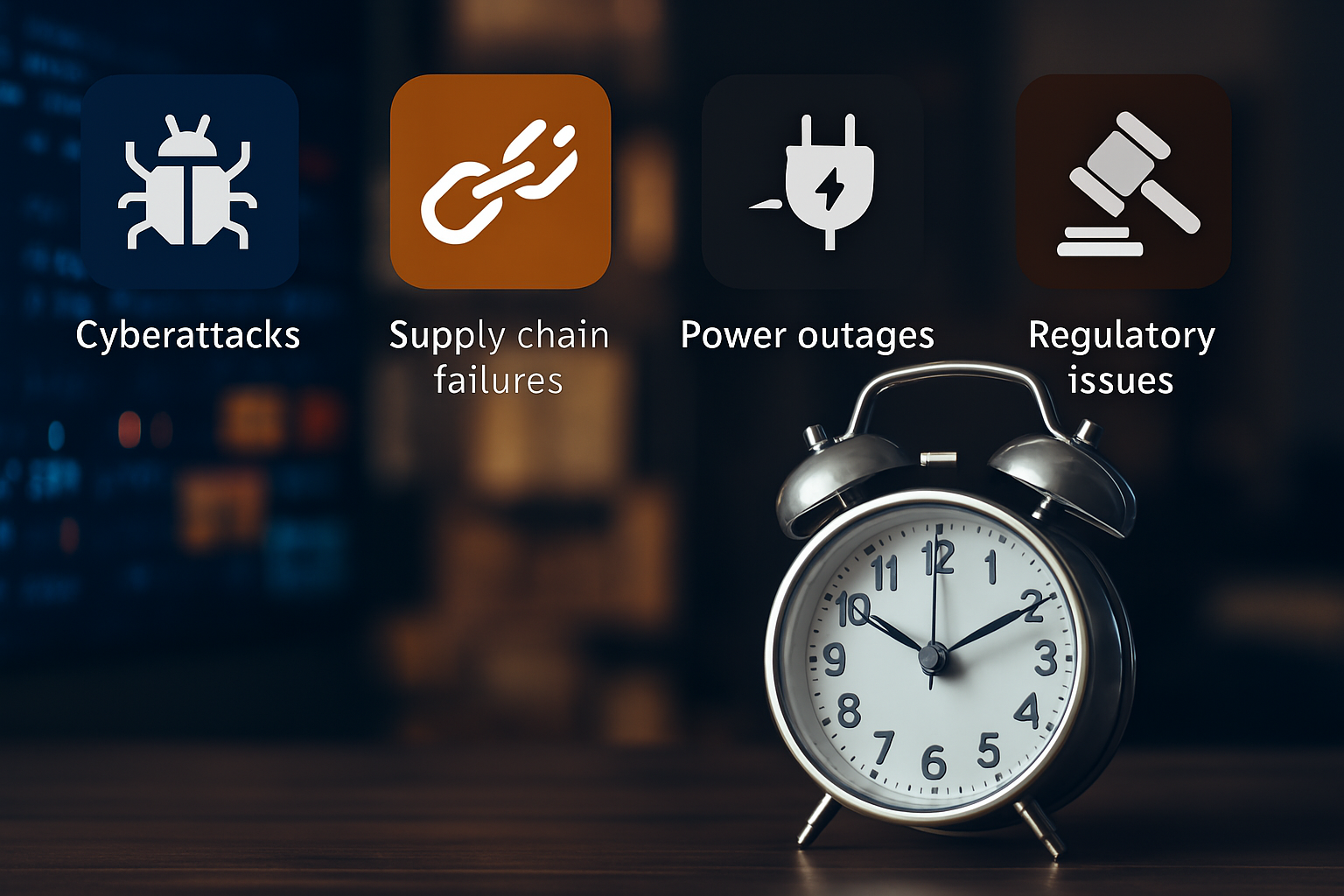
Cyberattacks, supply chain failures, power outages and regulatory issues can all leave a business unable to function.
The question is: if your business had to shut down tomorrow, how long could you survive without income?
In this guide, we’ll explore the causes of business downtime, the hidden costs that many don’t consider, and how having the right insurance can get you back on your feet quickly following an incident.
What causes business downtime?
Whether it’s due to an electrical fault, a burst pipe or an accident, structural damage, ruined stock and water contamination through fire or flooding can shut down a business for weeks or even months.
But these are far from the only reasons a business might be forced to stop trading. Here are some of the lesser considered causes of unexpected downtime:
Extreme Weather Events
Extreme weather events are increasing. In the 2023/24 storm season, the UK experienced a record-breaking 12 named storms, the most since the system began in 2015. These storms bring with them a high risk of flooding and property damage, again with the potential to shut a business down for long periods of time.
Read our guide:
How to Prepare Your Business for Winter
Theft & Vandalism
Stolen equipment or deliberate damage can make it impossible to operate. If you rely on specialist tools or plant, or can’t get by without your vehicles, you could find yourself losing revenue while you organise replacements.
Cyber Attacks & Data Breaches
Ransomware, phishing scams and data breaches can lock you out of the systems you need to run your business day to day. Recovery often takes time, and the reputation damage sustained on the way to getting back on track can be devastating.
Read our guides:
Social Engineering – One of Cybercrime’s Most Damaging Scams
Data Breaches – Planning Your Response Strategy
Ransomware – Don’t Pay the Price
Are You Fully Protected Against Cybercrime?
Cyberattacks – Are You Prepared to Fight Back?
Supply Chain Disruptions
If you can’t get your hands on essential stock or materials, your operations could easily grind to a halt. Global instability, customs issues and local supplier failures can all impact how a business runs on a day to day level.
Power Outages & Utility Failures
Sudden loss of electricity, gas, water or internet can cause significant disruption, particularly for retailers, manufacturers, and online businesses. When production grinds to a halt or orders can’t be despatched, profits suffer – and so do reputations.
Machinery & Equipment Breakdown
If key machinery fails, production stops. Repairs and replacements can be costly and time-consuming, but the lack of output can damage turnover as well as customer relations. IT failures can also be crippling.
Strikes & Industrial Action
Staff walkouts or wider industry strikes – for example across transport, postal or delivery services – can have major knock-on effects that slow down or even bring operations to a standstill.
Regulatory Shutdowns & Compliance Breaches
Fire safety failures, HSE investigations or food hygiene issues can result in forced closures. Turnover comes to a stop, and goodwill amongst customers and staff can be impacted.
Public Health Crises & Pandemics
Covid-19 showed how quickly businesses can be forced to shut due to health risks, staffing shortages, or lockdowns, reducing customer footfall and impacting turnover.
Key Person Loss
The loss of a business owner, specialist employee or consultant or key supplier due to illness, injury or unexpected departure can severely disrupt operations. It can also have a detrimental effect on competitive edge if specialist skills are lost.
💡 Most businesses aren’t prepared for all of these risks – but even one could have serious financial consequences. The question is – if the worst happened – could your business continue trading?
The hidden costs of business downtime – why it’s more than just lost sales
Many businesses think of downtime purely in terms of lost revenue. But the financial impact often goes far beyond simply being unable to trade.
Here are some of the less obvious costs that businesses face when operations grind to a halt:
- Ongoing overheads – Even when income stops, expenses don’t. Rent, wages, utilities and supplier payments still need to be covered.
- Customer loss & reputation damage – If you can’t fulfil orders or meet deadlines, customers may go elsewhere – and they might not return.
- Operational disruption – The time and effort needed to rebuild, replace lost stock, or repair damage can set a business back for months.
- Legal & regulatory costs – Failing to meet contractual obligations or compliance requirements can lead to penalties, lawsuits or loss of licenses.
- Additional recovery costs – Businesses often need to spend more to get back on track, whether it’s hiring temporary staff, renting replacement premises, or fast-tracking repairs.
Downtime doesn’t just pause a business – it can drain finances long after operations resume. Without a financial safety net, even a short disruption could have long-term consequences.
How business interruption insurance can help keep you afloat
No business is immune to downtime. But while you can’t always prevent disruption, you can protect your finances against its impact. That’s where business interruption insurance comes in.
This cover is designed to keep your business financially stable while you recover, ensuring that an unexpected closure doesn’t turn into a permanent one.
Depending on policy specifics, here’s how it can help:
- Replaces lost income – If your business can’t trade due to an insured event, this cover compensates for lost revenue.
- Covers ongoing expenses – Rent, wages, and supplier payments don’t stop when business does – a business interruption policy can ensure they’re covered.
- Pays for temporary relocation – If your premises are damaged or unsafe, you may need to set up elsewhere. Business interruption insurance can help fund a temporary location.
- Covers extra recovery costs – Whether it’s hiring temp staff, renting replacement equipment or fast-tracking repairs, this cover helps with the additional expenses of getting back to normal.
- Protects cash flow – Downtime can put a major strain on finances. With the right cover, your business can continue to meet its financial obligations and avoid long-term disruption.
Business interruption insurance means that when disaster strikes, your business can focus on recovery rather than survival.
💡 Could your business bounce back without it?
Protect your business – before it’s too late
Business downtime isn’t just about fire or floods – it can strike in many ways, from cyberattacks and power outages to supply chain failures and regulatory shutdowns.
The financial impact can be severe, with lost revenue, ongoing expenses, and recovery costs adding up fast. But with business interruption insurance, you can keep cash flowing, cover essential costs, and recover faster.
Don’t wait until disaster strikes to realise you’re unprotected.
Contact our commercial team today for a tailored quote – and make sure your business is covered.
Share This Story, Choose Your Platform!
Most businesses assume downtime is only caused by fire or flooding, but there are many other risks that can bring operations to a halt – risks that any business of any size or industry sector can be exposed to.
Cyberattacks, supply chain failures, power outages and regulatory issues can all leave a business unable to function.
The question is: if your business had to shut down tomorrow, how long could you survive without income?
In this guide, we’ll explore the causes of business downtime, the hidden costs that many don’t consider, and how having the right insurance can get you back on your feet quickly following an incident.
What causes business downtime?
Whether it’s due to an electrical fault, a burst pipe or an accident, structural damage, ruined stock and water contamination through fire or flooding can shut down a business for weeks or even months.
But these are far from the only reasons a business might be forced to stop trading. Here are some of the lesser considered causes of unexpected downtime:
Extreme Weather Events
Extreme weather events are increasing. In the 2023/24 storm season, the UK experienced a record-breaking 12 named storms, the most since the system began in 2015. These storms bring with them a high risk of flooding and property damage, again with the potential to shut a business down for long periods of time.
Read our guide:
How to Prepare Your Business for Winter
Theft & Vandalism
Stolen equipment or deliberate damage can make it impossible to operate. If you rely on specialist tools or plant, or can’t get by without your vehicles, you could find yourself losing revenue while you organise replacements.
Cyber Attacks & Data Breaches
Ransomware, phishing scams and data breaches can lock you out of the systems you need to run your business day to day. Recovery often takes time, and the reputation damage sustained on the way to getting back on track can be devastating.
Read our guides:
Social Engineering – One of Cybercrime’s Most Damaging Scams
Data Breaches – Planning Your Response Strategy
Ransomware – Don’t Pay the Price
Are You Fully Protected Against Cybercrime?
Cyberattacks – Are You Prepared to Fight Back?
Supply Chain Disruptions
If you can’t get your hands on essential stock or materials, your operations could easily grind to a halt. Global instability, customs issues and local supplier failures can all impact how a business runs on a day to day level.
Power Outages & Utility Failures
Sudden loss of electricity, gas, water or internet can cause significant disruption, particularly for retailers, manufacturers, and online businesses. When production grinds to a halt or orders can’t be despatched, profits suffer – and so do reputations.
Machinery & Equipment Breakdown
If key machinery fails, production stops. Repairs and replacements can be costly and time-consuming, but the lack of output can damage turnover as well as customer relations. IT failures can also be crippling.
Strikes & Industrial Action
Staff walkouts or wider industry strikes – for example across transport, postal or delivery services – can have major knock-on effects that slow down or even bring operations to a standstill.
Regulatory Shutdowns & Compliance Breaches
Fire safety failures, HSE investigations or food hygiene issues can result in forced closures. Turnover comes to a stop, and goodwill amongst customers and staff can be impacted.
Public Health Crises & Pandemics
Covid-19 showed how quickly businesses can be forced to shut due to health risks, staffing shortages, or lockdowns, reducing customer footfall and impacting turnover.
Key Person Loss
The loss of a business owner, specialist employee or consultant or key supplier due to illness, injury or unexpected departure can severely disrupt operations. It can also have a detrimental effect on competitive edge if specialist skills are lost.
💡 Most businesses aren’t prepared for all of these risks – but even one could have serious financial consequences. The question is – if the worst happened – could your business continue trading?
The hidden costs of business downtime – why it’s more than just lost sales
Many businesses think of downtime purely in terms of lost revenue. But the financial impact often goes far beyond simply being unable to trade.
Here are some of the less obvious costs that businesses face when operations grind to a halt:
- Ongoing overheads – Even when income stops, expenses don’t. Rent, wages, utilities and supplier payments still need to be covered.
- Customer loss & reputation damage – If you can’t fulfil orders or meet deadlines, customers may go elsewhere – and they might not return.
- Operational disruption – The time and effort needed to rebuild, replace lost stock, or repair damage can set a business back for months.
- Legal & regulatory costs – Failing to meet contractual obligations or compliance requirements can lead to penalties, lawsuits or loss of licenses.
- Additional recovery costs – Businesses often need to spend more to get back on track, whether it’s hiring temporary staff, renting replacement premises, or fast-tracking repairs.
Downtime doesn’t just pause a business – it can drain finances long after operations resume. Without a financial safety net, even a short disruption could have long-term consequences.
How business interruption insurance can help keep you afloat
No business is immune to downtime. But while you can’t always prevent disruption, you can protect your finances against its impact. That’s where business interruption insurance comes in.
This cover is designed to keep your business financially stable while you recover, ensuring that an unexpected closure doesn’t turn into a permanent one.
Depending on policy specifics, here’s how it can help:
- Replaces lost income – If your business can’t trade due to an insured event, this cover compensates for lost revenue.
- Covers ongoing expenses – Rent, wages, and supplier payments don’t stop when business does – a business interruption policy can ensure they’re covered.
- Pays for temporary relocation – If your premises are damaged or unsafe, you may need to set up elsewhere. Business interruption insurance can help fund a temporary location.
- Covers extra recovery costs – Whether it’s hiring temp staff, renting replacement equipment or fast-tracking repairs, this cover helps with the additional expenses of getting back to normal.
- Protects cash flow – Downtime can put a major strain on finances. With the right cover, your business can continue to meet its financial obligations and avoid long-term disruption.
Business interruption insurance means that when disaster strikes, your business can focus on recovery rather than survival.
💡 Could your business bounce back without it?
Protect your business – before it’s too late
Business downtime isn’t just about fire or floods – it can strike in many ways, from cyberattacks and power outages to supply chain failures and regulatory shutdowns.
The financial impact can be severe, with lost revenue, ongoing expenses, and recovery costs adding up fast. But with business interruption insurance, you can keep cash flowing, cover essential costs, and recover faster.
Don’t wait until disaster strikes to realise you’re unprotected.
Contact our commercial team today for a tailored quote – and make sure your business is covered.